
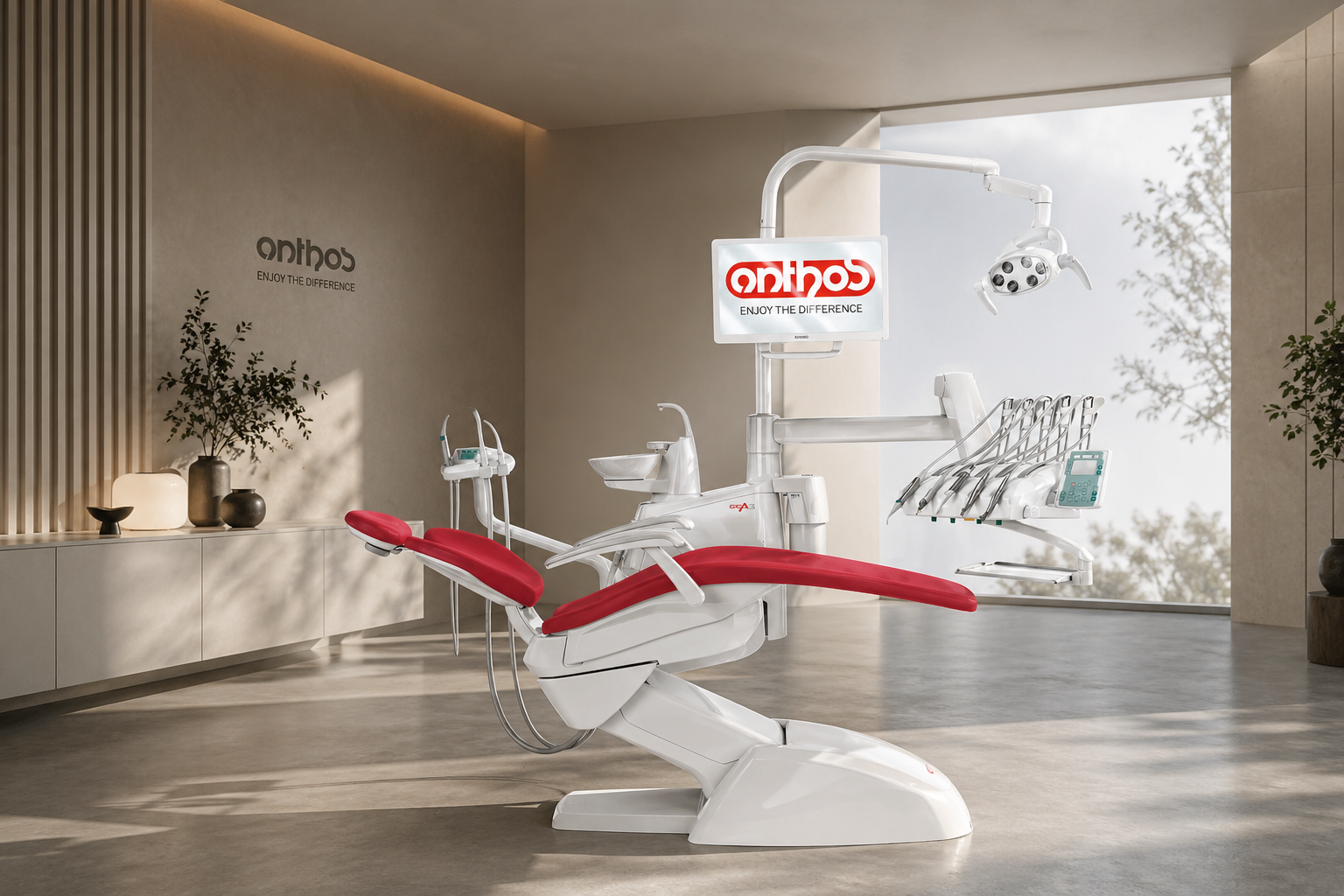
Why Integration Is Shaping the Future of Dentistry
Rethinking the Modern Dental Surgery
Across Australasia, dental practices are entering a new phase. While technology continues to advance, the real shift is not just access to new equipment, but how those systems are brought together within the clinical environment.
As a leading supplier of dental equipment and integrated solutions, Anthos Australia sees this shift play out every day. Working closely with dentists planning new builds, refurbishments and upgrades, the focus has moved beyond individual products to the performance of the entire surgery.
It is no longer just a question of what equipment is installed, but how the surgery functions as a complete system.
From Fragmented Setups to Connected Workflows
For many years, dental practices evolved incrementally. A dental unit would be installed, imaging added later, and software introduced over time. While each step improved capability, it often resulted in disconnected workflows, with clinicians moving between systems that were not designed to operate together.
That model is now changing.
More practices are stepping back and approaching their surgery as a connected environment from the outset. Imaging, diagnostics, treatment planning and patient communication are being considered as part of a single workflow.
When these elements are aligned, the impact is immediate. Processes become more efficient, information is easier to access, and the clinical experience becomes more consistent.
This is not about adding complexity. In many cases, it is about simplifying it. Integrated systems reduce friction, allowing clinicians and their teams to focus on patient care rather than managing multiple platforms.
Designing for Workflow and Experience
This shift is most visible in how modern surgeries are being designed.
Layouts are increasingly shaped by how clinicians and assistants move within the space, rather than simply how equipment is positioned. Reach, visibility and ergonomics are considered alongside technology integration, creating environments that support both efficiency and comfort.
At Dental District in Melbourne’s west, this approach is clearly reflected. Designed as a five-star patient experience, the Altona Meadows practice combines general, cosmetic and emergency dentistry within a purpose-built environment.
Anthos A7 dental units sit at the centre of each surgery, integrated with MyRay intraoral imaging and digital sensors to support chairside diagnostics. A MyRay X5 3D CBCT system enables advanced imaging and treatment planning within the same clinical setting.
The result is a surgery that feels intuitive to work in, where technology supports the clinical process rather than interrupting it.
A different but equally important example can be seen at Dr Daniel Tan & Associates (DDTA) Dental in Launceston.
As a multi-disciplinary practice, DDTA brings together dentistry, skin health and wellness services under one roof. Following a major renovation, the practice now includes six treatment rooms built around Anthos Classe A5 dental units and MyRay imaging.
Here, integration supports a broader model of care, creating a more considered and personalised patient experience.
Across both practices, the common thread is clear. Technology is not introduced as a series of upgrades, but as part of a cohesive system that supports how the practice operates day to day.
From Concept to Delivery
One of the biggest challenges for practices is turning the idea of integration into something practical.
It is one thing to understand the value of connected systems. It is another to implement them in a way that works from day one.
This is where we are seeing a shift towards fully integrated surgery setups. Whether it is a single surgery or a complete practice fit-out, there is growing demand for solutions designed to work together from the outset.
At Anthos Australia, this has led to a more structured approach. Our surgery packages are built around integration, combining dental units, imaging and essential equipment into a single, connected system.
The benefit goes beyond convenience. It provides clarity during planning, reduces compatibility issues, and ensures workflows are aligned from the moment the surgery is operational.
What Comes Next for the Industry
Technology will continue to evolve, with advances in automation, connectivity and data-driven tools shaping the future of dentistry.
However, the practices that benefit most will not be those with the most advanced equipment alone. The real advantage will come from how effectively those technologies are integrated into the clinical environment.
The next phase of dentistry will be defined by systems that are connected, considered and aligned with the way clinicians work in practice.
Working with Anthos Australia
Anthos Australia focuses on helping practices bring this level of integration to life.
The team works directly with dentists across the country to design, supply and support dental units, imaging and workflow solutions tailored to modern practice. From new builds to surgery upgrades, every element is considered to ensure systems work together seamlessly.
Anthos and MyRay are part of Cefla, one of Italy’s leading manufacturers of dental equipment, combining global innovation with advanced engineering and long-term industry expertise.
For Australian practices, this provides access to proven technology, supported locally by a team that understands how surgeries operate day to day.
To learn more, speak with the Anthos Australia team about their latest surgery packages and how they can support your next project.
Explore Anthos Dental Equipment
Choose an in-person or virtual showroom appointment and see exactly how Anthos equipment works, how it fits into your surgery, and how it supports the way you practise every day.